Parent portal and instant phone alerts for schools in Kenya
Ask any school secretary what fills the phone line at 4 pm: "Did my child's bus leave?", "What is the balance?", "Were the results released?" A parent portal answers those questions without a person picking up the phone. An alert answers them before the parent asks. This article explains what each one does, what it costs, and where Opero stands today.
What should a school parent portal show?
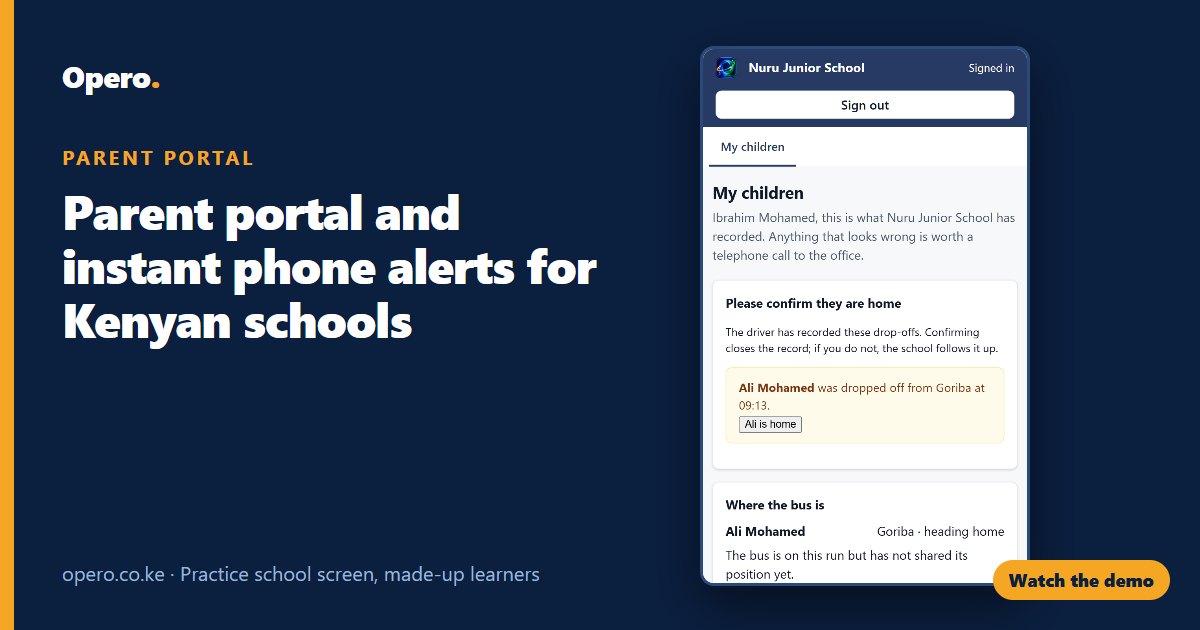
A parent portal is a login for a guardian that shows information about their own children, and no one else's. A useful one covers:
- Fees: the fee statement.
- Attendance: the last 90 days, with the share of sessions attended.
- Results and report cards, once the school publishes them.
- Transport: the child's bus status, and a button to confirm they arrived.
- Notices from the school.
Opero's parent portal is part of the base system, not an add-on, at KSh 250 per learner per term. The price card is on the welcome page, and our 2026 buying guide compares it with other vendors.
Why does a portal alone not get used?
A portal that parents must remember to open is often ignored. We see it often: the school launches a portal, a few dozen parents sign in, and the rest keep phoning. Our post on getting parents to use the portal covers the adoption side. The technical half of the answer is alerts: if the important thing comes to the parent, the portal becomes the place they tap to read the rest.
What is web push, and why is it free?
Web push is the message you sometimes see appear on a phone's lock screen from a website you have allowed. The browser maker's own push service carries it, so there is no per-message charge and no SMS provider. The parent needs only to open the portal and tap Enable on this device once.
Opero has this built. When it is switched on for a school, these events can send a push to a signed-in parent:
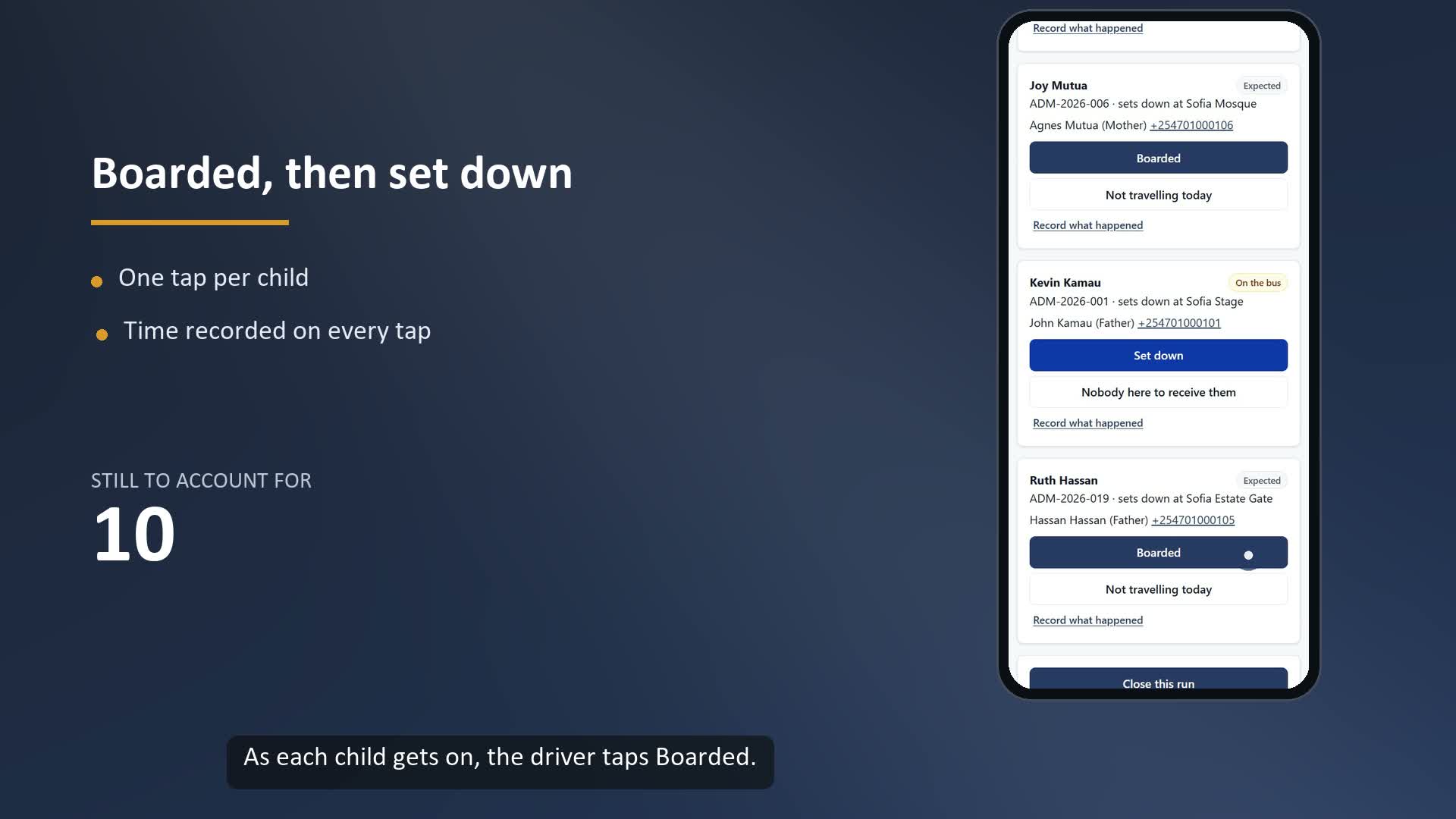
- a child boarded the bus, or is not travelling that day;
- a child was dropped off, with the stop and time, so a tap opens the confirmation;
- an absence was recorded;
- results were published;
- a school announcement or direct message;
- an emergency message.
Some rules were built in on purpose:
- Opt-in only. A phone receives nothing until the parent allows it, and they can stop it any time in their browser.
- Quiet hours. Routine notices wait between 21:00 and 06:00 East Africa Time. Urgent and emergency messages are not held back.
- Private by design. The address that identifies a phone is treated like a secret and is never written to logs.
- iPhone note. On an iPhone the portal must first be added to the Home Screen before push can work. Android and desktop browsers can allow it directly.
What is live today, and what is not?
As of 27 October 2026, in plain terms:
| Channel | Status |
|---|---|
| Parent portal | Built; part of the base system |
| In-portal notices | Built |
| Web push alerts | Built; goes live once the latest release is deployed and its keys are set on the server. Each parent must opt in on their own device |
| Code exists; the school's mail account is not configured yet | |
| SMS | Code exists; no SMS account is connected yet, so it is not live |
| Code exists; needs a Meta business account, a number and approved message templates, so it is not live |
We would rather you know this now than discover it on the day a head teacher asks why nobody got a message. Until SMS or WhatsApp are connected, keep your phone call routine for anything urgent, and keep sharing news in the school's usual groups.
What would SMS or WhatsApp cost when they come?
We have not signed up for either, so we have no price to quote you yet. As a reference point only, our planning notes assume about KSh 0.52 for a WhatsApp utility message in Kenya and about KSh 0.80 for an SMS. Check the current rate cards before you budget. A school sending thousands of notices a month should compare web push, which is free, against paid channels before deciding what really needs a text. Our older post on SMS for school communication discusses what to send and what to skip.
How does this connect to the bus run?
The most valuable push a parent can get is "your child was set down at the stop, tap to confirm they arrived". That is the last step of a workflow we describe in how a school bus run can account for every child. The push does not replace the confirmation. It prompts it.
What about children's privacy?
A portal and alerts handle children's data. Kenya's Data Protection Act, 2019 applies to schools, so the school stays in control of who can see what. In Opero, a guardian sees only the learners linked to them, and each school's data is kept apart from every other school's. Read more in who owns your school's data. Opero does not give legal advice; confirm your own obligations with the Office of the Data Protection Commissioner or a lawyer.
How do you get parents to switch alerts on?
Because every parent must opt in on their own phone, adoption is a people task as much as a technical one.
- Explain it at the parents' meeting in two sentences: what the alert says, and that it can be turned off any time.
- Help in person. Ask parents to bring their phones to the first meeting, and let a teacher or clerk walk them through the one tap.
- Start with the alert that matters most. For a school with a bus, that is the drop-off message. For a day school without transport, it may be the notice that results are published.
- Do not over-send. If every announcement becomes a push, parents will switch it off. Keep it for things that need attention.
- Keep an alternative for families without a smartphone, such as a phone call from the office for urgent matters, until SMS is connected.
A school that treats alerts as a few well-chosen messages will see them read. One that treats them as a megaphone will see them muted.
Frequently asked questions
Do parents need a smartphone to use the portal? They need a phone or computer with a modern browser. A basic phone without a browser cannot use the portal or push. That is why SMS matters for some families, and why we are open that it is not live yet.
Is web push really free? There is no per-message fee from Opero or a provider. The parent's internet data is used for a very small message. The school still pays for the base system.
Will every parent receive alerts automatically? No. Each parent must sign in and opt in on their device. A parent who does not will still see updates inside the portal.
Can I send an SMS or WhatsApp message through Opero today? Not yet. Both are built in code but not switched on. We will say so on this site when that changes.
Does the parent portal cost extra? No. It is in the base price of KSh 250 per learner per term.
See it on a practice school. Watch the demo above, then ask for logins to NURU, a practice school with made-up learners. No real child is in it.
Sources: Opero capability review and notifications rollout notes of 27 October 2026; The WhatsApp and SMS per-message figures are planning assumptions from our rollout notes, not quotes, and must be rechecked at registration. Written by the Opero team. Channels marked not live are not claimed.